Showing posts with label puerto rican. Show all posts

Friday, February 20, 2015

Old Fashioned Rican


As I mentioned on my last post, I spend a week in Puerto Rico in late January. What I did not mention was how crazy I went buying booze. By the end of that week I had bought 6 bottles of wine, 1 bottle of fruit wine, 1 bottle of chocolate liqueur, and 2 bottles of rum. It’s not like I needed to be hammered 24/7 like an “all-inclusive” brat, but all of these beverages were Puerto Rican made and let’s face it: we all need a souvenir to remember our trips. For a couple of years now, I’ve been intrigued by the appearance of Puerto Rican made (or at least Puerto Rican bottled) wines, and I must admit I’ve been, for the most part, pleasantly surprised. And they are inexpensive too; I’m talking 4-5 dollars per bottle. It reminded me of those days in Spain when I could go and buy quality wine for 3-5 euros. Oh, the good old days.


But let not kid ourselves; Puerto Rico’s best booze comes in rum form. You must have heard of Ron Bacardí, as it is world famous (and yummy). But in Puerto Rico, Bacardí is not even the top selling rum; Don Q is the local favorite. While is true that the sugar cane industry is dead and unlikely to resurrect anytime soon, there’s a resurgence of the more interesting, artisanal rums brought in vogue by the recent “legalization” of the centuries old pitorro, homemade rum aged underground and often cured with fruits. Although most of the pitorro and other rums I’ve tried are absolutely delicious, I still consider Ron del barrilito (Rum from the small barrel) the best rum in the country. Ron del barrilito has been around since the 1880s, but I must confess that I was introduced to it by a Spanish friend in Madrid. Since then, this rum and I have been the best of friends. Ron del barrilito is aged in old (and I mean more than a century kind of old) barriles de Jerez, (sherry barrels) for 6-10 years. It has an amazing aroma that reminds me of Cognac, and a great taste with notes that remind me of oak, vanilla, spices and fruits. Of course, I say this based on my taste, and in the taste of the countless bottles I’ve drunken, but you can read a more detailed (and educated) description here.  
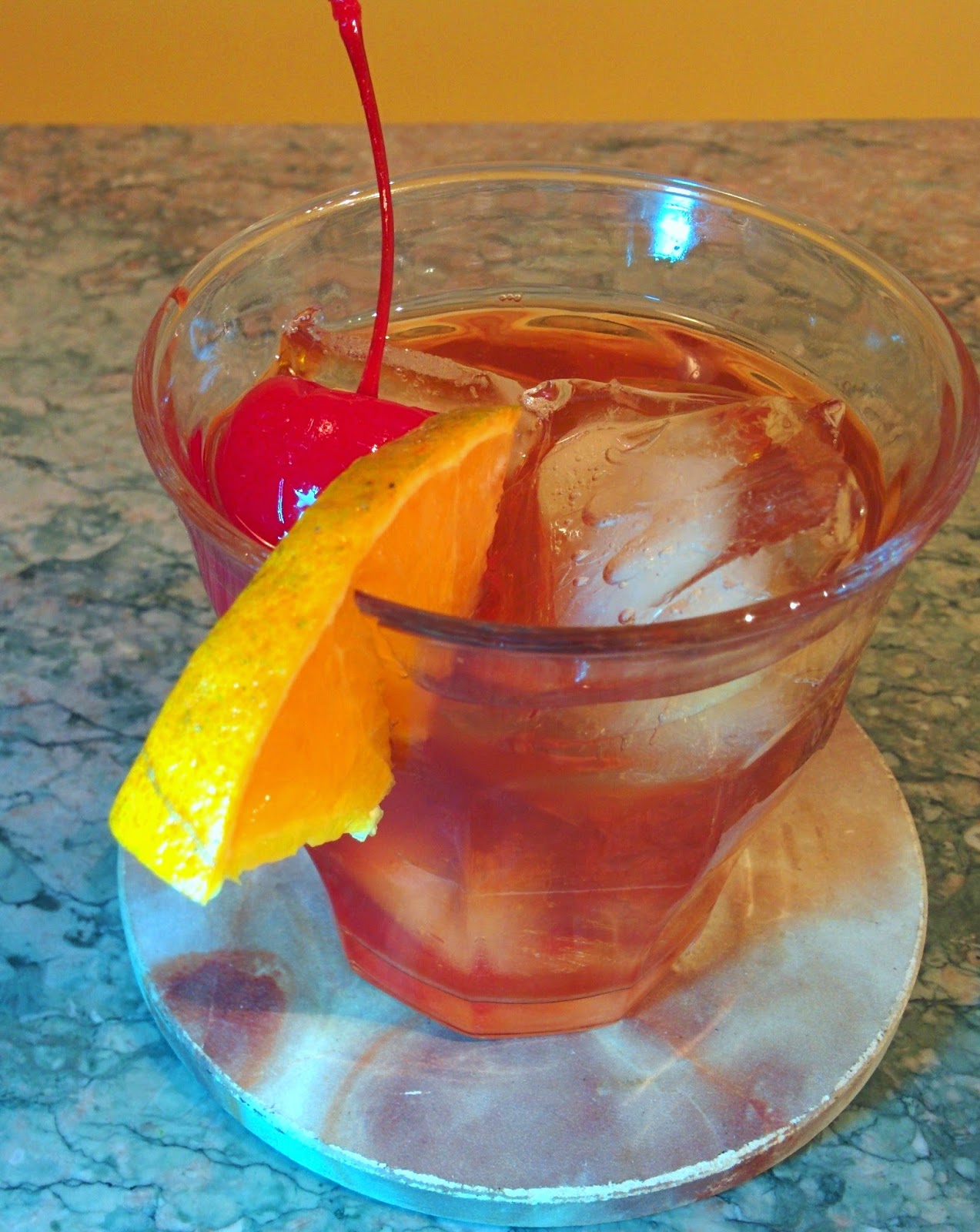
 
Old Fashioned Rican


While is best to just drink this Puerto Rican masterpiece on its own, THIS PUERTO RICAN MASTERPIECE decided to use it in a cocktail to shoosh the winter chills away. I actually made two versions of this drink I’ll call the Old Fashioned Rican: The Old Fashioned Rican, and the Old Fashioned Rican light. The former, is a full bodied luxurious cocktail; the latter, is a refreshing drink that I will definitely make again during the summer months. Either way, the complex flavors of the rum carry through, and both drinks made me really happy (wink, wink). The chills may still here, but they don’t bother me anymore. 

Old Fashioned Rican Light

On the road shortcut

Old Fashioned Rican
¾ teaspoon sugar
3 dashes Angostura bitters
3 ounces Ron del barrilito
Ice
Add sugar to an Old Fashioned glass (note, I'm not using an old fashioned glass here). Add the bitters, and mix. Add the rum, and stir. Add ice to fill the glass. Garnish with an orange slice, and a cherry.

Old Fashioned Rican Light
Old Fashioned Rican
¾ teaspoon sugar
3 dashes Angostura bitters
1.5 ounces Ron del barrilito
1.5 ounces carbonated water (or club soda)
Ice

Add sugar to an Old Fashioned glass (note, I'm not using an old fashioned glass here). Add the bitters, and mix. Add the rum and the water, and stir. Add ice to fill the glass. Garnish with an orange slice, and a cherry.


Monday, December 15, 2014

Pollo al caldero dinner


I commute by bike during the warm months, and I drive during the cold ones. That’s the way I’ve done it for several years now. Not to sound too catastrophic nor pessimistic, but I know that if a cyclist will have an accident with either snow or black ice, it will be me. I know it. But somehow, I’ve been feeling guilty every time I see someone commuting by bike. I’m not sure what’s underneath that guilt, but it’s stupid and I need to stop it. I mean, what’s next feeling guilty over wearing boots and not sandals?

Thankfully, I know myself well enough to know that (sometimes) the best antidote for this kind of behavior is to try to displace my worries with the thoughts of happy memories. And since my happy thoughts seem to always be connected to food in one way or another, I slowly shifted towards the memories of my aunt’s pollo al caldero. Pollo al caldero is basically a whole chicken cooked in a caldero or Dutch oven, on the stove. It’s cooked with green cubanelle peppers, and it features the delicate and nutty taste of achiote (annatto), which also gives the chicken a beautiful color. This is probably one of the first dishes I learned to make. I loved it so much, that I developed a technique for making it in my dorm’s microwave. Let’s just say that if there is one thing I have in abundance, it’s determination.


This week I made a dinner inspired by pollo al caldero. I started by extracting the oils and colors from the achiote seeds in the Dutch oven. Instead of removing the seeds after the first couple of minutes, I kept them there to develop a smokier, deeper flavor. I sautéed onions, cubanelle and jalapeño peppers, garlic, and tomato paste in that oil. Then I added a seasoned whole chicken, breast side down, and covered the Dutch oven. It went to the oven to roast at 325F. After a half hour, I turned the chicken breast side up, and returned it to the over (covered) for an additional 20 minutes. Finally, I removed the lid and roasted uncovered an additional 15 minutes. 


There are significant differences between the pollo al caldero and what I did. The pollo al caldero does not have the stew base I made. It has the chicken, seasoned with ground achiote, and the cubanelle peppers. That’s it. And it does not go in the oven; it gets cooked on the stove. But I wanted something different. I wanted to use the juices of the chicken, and my stewing components to make a broth I could eat independently from the chicken as a “soup”. That soup is what actually carried all the pollo al caldero flavors. It was so damn good!


The chicken had the classic taste of a rotisserie chicken, with an added benefit: juiciness. This may well be one of the juiciest chicken you may ever have. That breast was to die for. Yumm. I tossed whole wheat noodles in the chicken broth and had them as a side. Oh my, were they delicious!

On the road shortcut:
1 small chicken (3-4 lb)
1 ½ teaspoon salt
¾ teaspoon pepper
½ teaspoon oregano
½ teaspoon basil
½ teaspoon cumin

2 tablespoons corn oil
1 teaspoon achiote (annatto) seeds
1 jalapeño, seeded and diced
1 cubanelle pepper, chopped
1 onion, chopped
2 garlic cloves, crushed
1 teaspoon tomato paste

Whole wheat noodles

Preheat the oven to 325F.
Season the chicken with salt, pepper, oregano, basil and cumin. Set aside.

In a Dutch oven, heat the corn oil over medium heat. Add the achiote seeds. The color will be extracted within 1-2 minutes. (At this point, you can either remove the seeds with a slotted spoon, or keep them to add a deeper, smoky flavor.) Add the onions, cubanelle and jalapeño peppers, and a pinch of salt. Sauté for 4-5 minutes. Add the garlic and tomato paste and cook for an additional minute (stirring).

Add the chicken, breast side down. Cover the Dutch oven, and transfer it to the oven. Cook for 30 minutes. Remove from the oven, and carefully turn the chicken breast side down. Cover, and return to the oven for an additional 20 minutes. Remove the lid and cook for an additional 15 minutes. Remove the chicken from the Dutch oven, and let it rest for 15-20 minutes before carving.

Boil the noodles according to the manufactures instructions. Use the juices from the chicken to coat the noodles.

Serve the chicken broth on its own with the onions and peppers, but leave the achiote seeds behind.

Tuesday, August 26, 2014

Mashed plantains


I stopped by a Puerto Rican/international food market the other day just because I was in the neighborhood. Although there were tons and tons of interesting products stocked in the many isles of this deceivingly small market, my eyes were fixed on ripe plátanos (plantains) from the moment I opened the door (and smelled the ever-present smell of dried cod). Plantains can be found in most big supermarkets around Cleveland, but they are smaller than the ones I grew up with and they don’t ripe as well. Plantains are cultivars of bananas; that means that plantains are to bananas what Brussel sprouts and cauliflower are to cabbage. Just like bananas, you can use them either green or ripe, but they make totally different dishes. The green plantains are starchy and savory, while the ripe ones are sweet, with a creamy texture, which makes it crucial to commit to one ripeness state. When you want a green plantain make sure it’s green, and when you want it to be ripe, make sure that the peel is yellow with black spots; just yellow won’t cut it. If a plantain is not ripe enough, its texture, its flavor and its sweetness will be underwhelming.


In Puerto Rico, most of the plantain recipes require deep frying. But my grandma, who was a fierce advocate of healthy eating back in the day when high fat and high carbs were still in, was not having any of it. She would instead, make us boiled plantains (they were terrific!). To this day, I prefer to eat plantains boiled rather than fried. They are so easy and simple to make too. You make some slits on the peel, and boil them in salted water until a fork can go through.


The boiled plantains have a beautiful sweetness to them that is unlike anything else. The main problem is that although they may be tasty and very nutritious, they don’t look too appealing. If I remember correctly, my sisters, my cousins and my parents were somewhat thrown off by the looks of these plantains, so they would often avoid eating them. (More plantains for me!)


To give these guys a little bit of a pick me up, and make them more appealing, I mash them. I use some butter and brown sugar to enhance their creaminess and sweetness, and I garnish them with fresh thyme to get a nice lemony aroma. That’s it. Now the boiled plantains remain delicious, but they are much more appetizing. They really look much more luscious and luxurious than their 3 minutes-ago counterparts. Easy, simple, delicious!


On the road shortcut

253 calories, 59 g carbs, 4 g fat, 2 g protein per serving (4 servings)

3 plantains
1 tablespoon butter
1 teaspoon brown butter
Fresh thyme to garnish

Bring salted water to a boil. Make some slits on the plantain peel, on a spiral pattern. Add them to the boiling water and cook until a fork can go through easily.
Remove the plantain peel. (You may need to wait a few minutes so the plantains are easier to manage since they’ll be hot!) The peel should be easy to remove. I use to forks to pull them apart from opposite ends.
Transfer the plantains to a mixing bowl. Add the butter and the brown sugar. Mash the plantains. Transfer the mash to a serving dish, and garnish with fresh thyme.